Resource Guide
The Tech Skills Gap: Preparing for the Future of Work
This living guide curates credible research and practical actions for students, job-seekers, and employers. Explore the problem, see the impact, and find concrete steps to upskill.
Introduction
The tech skills gap describes the growing disconnect between the digital skills employers need and the skills many students, job-seekers, and workers currently have. This isn’t about a lack of interest — it’s about a world where technology evolves faster than education and workplace training can keep up. This guide is designed to orient you. Instead of drowning you in statistics, it walks you through the why, the impact, and the pathways forward. My goal is to help you make sense of a complicated topic by highlighting the clearest insights from my research and my Zotero library. Whether you’re exploring careers, preparing for graduation, or simply trying to understand what “digital skills” really mean today, this guide offers a starting point.
The Problem
The skill gap exists because technology changes faster than most institutions can respond. Employers often need workers who understand modern tools — data analytics, cloud platforms, UX, AI-assisted workflows — but college curricula, training programs, and outdated job descriptions don’t always reflect those expectations. There’s also a mismatch in how skills are defined. Some companies want specific software experience; others want general digital literacy; others want the “ability to learn new tools quickly.” The result is confusion for employers, students, and job seekers. Finally, access plays a major role. Not everyone has equal exposure to computers, high-speed internet, technical electives, or professional development programs. These disparities widen the gap, especially in rural areas and underserved communities.
Impact
- Students and recent grads discover that their degrees don’t match job listings.
- Employers spend significant time and money retraining staff or outsourcing projects.
- Businesses lose productivity when teams can’t use digital tools efficiently.
- Communities fall behind when access to training isn’t equal.
This gap doesn’t just slow industry — it limits opportunity. As digital tools become essential across every field, people without access to training face greater barriers to advancement.
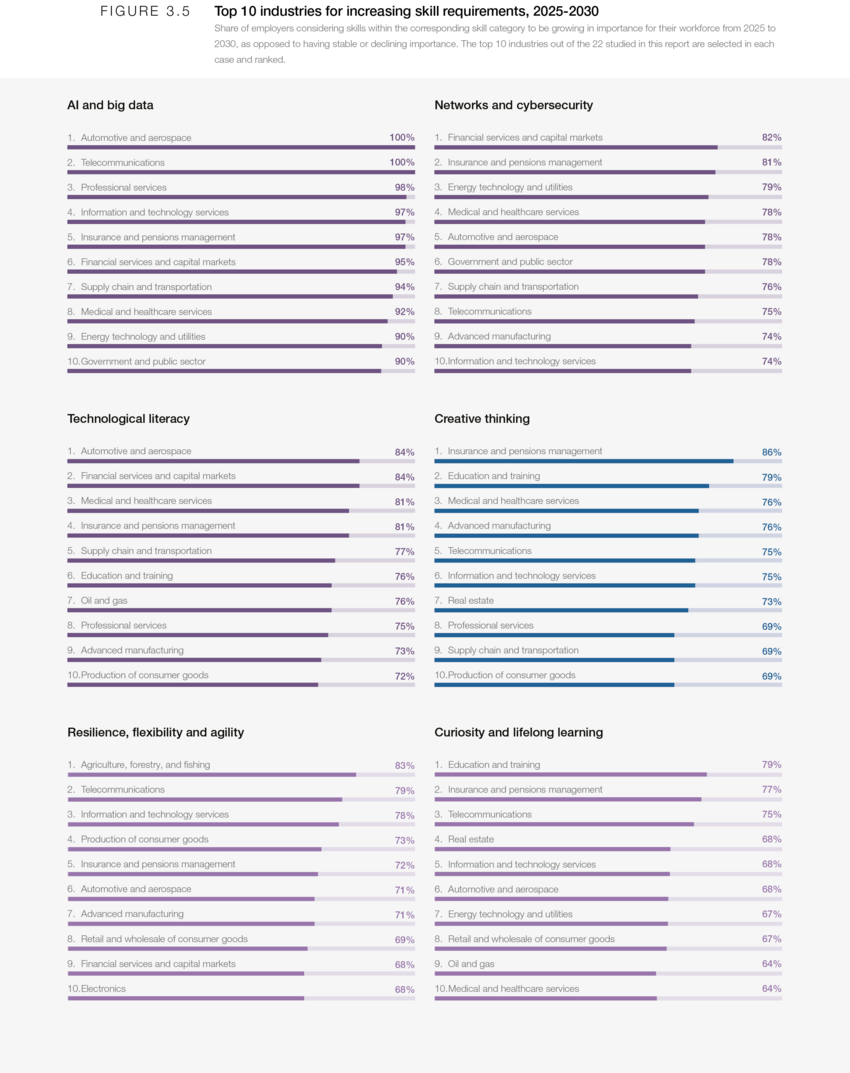
Top In-Demand Tech Skills by 2025 (Source: Future of Jobs Report)
Solutions
- Project-based learning that uses real workplace tools.
- Micro-credentials and certificates aligned with industry needs.
- Stronger partnerships between companies and education programs.
- Accessible online learning through Coursera, LinkedIn Learning, Google Career Certificates, and IBM SkillsBuild.
- Internships and apprenticeships that give hands-on experience with current technologies.
The key to closing the skills gap is flexible, targeted learning that adapts quickly as technology continues to evolve.
Future
The future of work will require hybrid skill sets: part technical, part analytical, and part human-centered. By 2030, most jobs will involve AI-assisted tools, data-driven decision making, and continuous reskilling.
- Knowing how to work with automated and AI-powered systems.
- Understanding and interpreting data in everyday workplace tasks.
- Solving problems creatively in digital environments.
- Communicating clearly across teams, tools, and platforms.
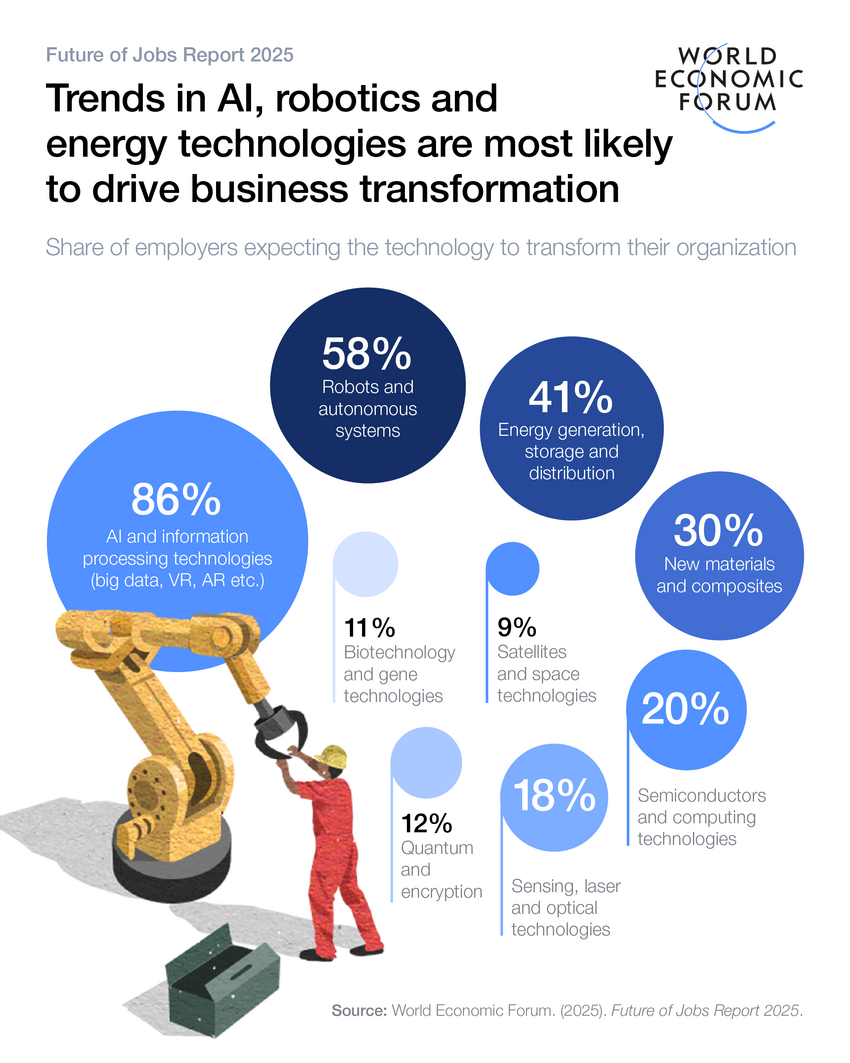
Technology Trends – Future of Jobs Report 2025
My reflection as a Digital Media and MIS student: This research reinforced that success doesn’t come from mastering one tool — it comes from staying adaptable.
Resources
These resources offer deeper insights into the tech skills gap and the future of digital work:
- My GitHub Portfolio — hands-on projects demonstrating applied technical and digital skills
- Tech Skills Gap Zotero Library — curated academic reports, articles, and data sources
- World Economic Forum — Future of Jobs Reports
- Pew Research — Digital readiness and workforce studies
- Brookings Institution — The digital skill divide and education research
- LinkedIn Workplace Learning Report — skills employers are prioritizing